
PSC Scholarships
Keung Xi Zhen
15 June 2026
Director, Service Development, SG Enable
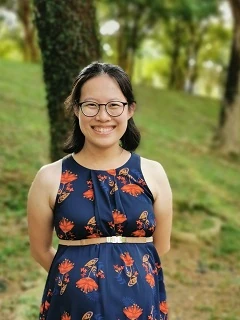
Year Awarded Scholarship: 2005
Undergraduate: Diploma in Biology, Julius-Maximilians-University of Würzburg, Germany
Postgraduate:
Submitted in February 2022
The PSC scholarship thus stood out for its flexibility, in providing exposure and development opportunities across the entire Public Service.— Keung Xi Zhen
Why did you apply for the PSC’s scholarship and ultimately choose to accept it?
The PSC scholarship was the only scholarship I applied for because I was certain then, even as an 18-year-old, that I would want to serve in the Public Service, to play my part to make Singapore a better place.
At that point, I couldn’t imagine myself working in a for-profit setting, yet I wasn’t quite sure where I would be able to make the largest contribution in the Public Service. The PSC scholarship thus stood out for its flexibility, in providing exposure and development opportunities across the entire Public Service. I had also heard that the PSC scholarship would support a wide range of academic interests and destination countries, and this was certainly validated in my case – I was given the opportunity to pursue Biology in Germany, which at first glance might not have been entirely relevant for Public Service.
How has being a PSC scholarship holder impacted your academic journey and/or professional experiences?
Being on the PSC scholarship gave me a peace of mind to pursue my interests during my studies. I was supported in all my plans, such as to carry out a research internship in Canada, and to represent my university in Model United Nations around the world.
Professionally, I was grateful to be provided opportunities to participate in milestone programmes, where I had early exposure to issues beyond my portfolio, and to be placed on the Public Service Leadership Programme (PSLP). In this programme, I was stretched in each of my postings, while at the same time being supported and guided by mentors.
Share with us some stories of your experiences as a public officer.
My first posting was with the National Climate Change Secretariat, under the Prime Minister’s Office (PMO), where I coordinated Singapore’s carbon emissions mitigation strategy across agencies and developed plans to achieve our long-term emissions target. My most memorable experience was participating in the United Nations Framework Convention on Climate Change (UNFCCC) climate summit, to see global negotiations happening before my eyes and history being made.
Thereafter, I joined the Family Policy Office under the Ministry of Social and Family Development (MSF). In a short 4-year stint, I worked on multiple portfolios ranging from marriage and parenthood, and supporting transnational and divorcing families, to supporting ageing families, including those without mental capacity or without next-of-kin. I remember most fondly the experience of initiating the passing of the Vulnerable Adults Act and seeing through legislative amendments to the Mental Capacity Act. It was a most satisfying end to many days and nights of hard work, to know that you were able to make a difference to fellow Singaporeans’ lives.
I then made the decision to remain in the social sector and took on a double-hatting opportunity in MSF where I served in the Social Service Office (SSO) as Assistant General Manager, and concurrently in Planning Division of the Social Policy and Services Group. While tiring, this arrangement helped reinforce in me the importance of policy being only as good as implementation. I endeavored to build in my team the habit of open communications and early consultation with our ops colleagues. As we rolled out Community Link (ComLink) in this period, my direct ground experience allowed us to quicky detect issues, finetune our ops processes, and improve communications with the ground.
After almost 8 years in MSF, I moved to the Ministry of Health (MOH), where I’m working on home care, palliative care and caregiver support policies. It hasn’t been too long since I joined MOH, but I’ve already begun working on a couple of exciting projects that will improve our care ecosystem, and form the basis for our long-term strategy.
Are there any misconceptions about working in the Public Service and/or being a PSC scholarship holder that you have come to realise are not true?
I don’t recall having any major misconceptions about the Public Service when I first joined, but I know there are many who may have negative perceptions of what working in the Public Service is like. One thing that has really struck me over my years in Service is the fact that the Public Service works hard, but also takes good care of its members. While work has become increasingly challenging, especially in the midst of the COVID-19 pandemic, I found that leaders in my organization placed particular emphasis on staff morale and well-being, and took particular effort to address feedback and issues raised. Middle managers were held accountable, but also supported one another (e.g. in sharing of best practices) – beyond service-wide initiatives, I believed this made the real difference to each officer’s lived experience.
If there is one word you could use to describe the Public Service, what would it be and why?
I would use the word “tenacious”. As a public officer, we often have to tackle extremely challenging issues (e.g., growing our national population, supporting victims of abuse and neglect). We also often get curveballs thrown our way (e.g., global developments beyond our control, COVID-19 pandemic). I have found that the Service remains tenacious, continuing to do our best in developing policy on the fly, and holding by our principles, regardless what the situation may be.
If you could give one piece of advice to prospective PSC scholarship applicants and/or recipients, what would it be?
I would advise prospective scholarship applicants/recipients to simply take the plunge and take up the scholarship, if you hope to have a meaningful career and contribute to Singapore’s development in a most direct manner.