
Mid-term Scholarship Holders
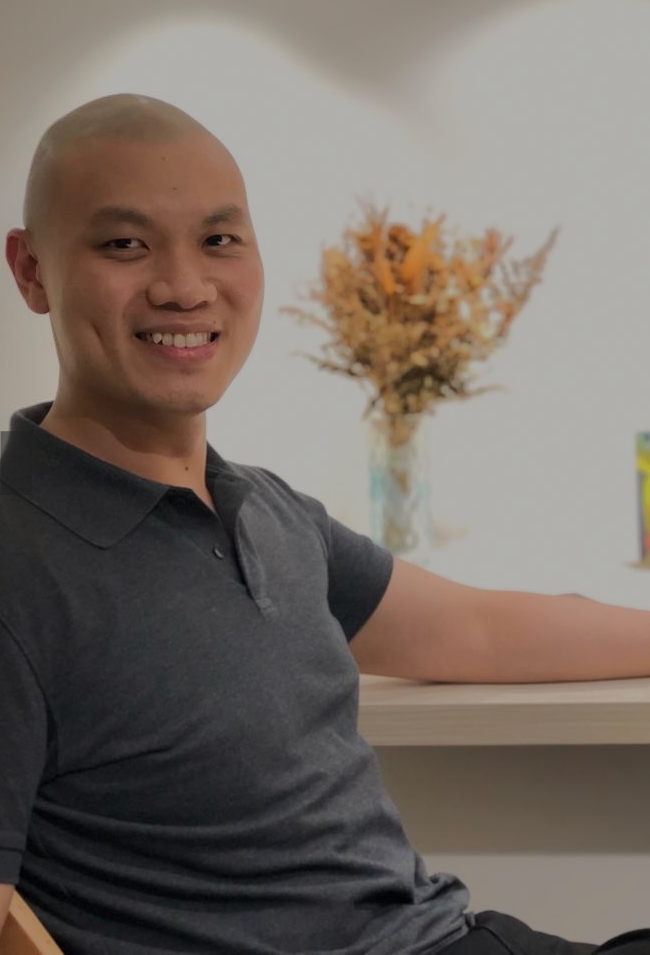
Kelvin Chia
16 June 2026
Senior Assistant Director (Planning Division), Ministry of Social and Family Development (MSF)
Year Awarded Scholarship: 2007
Undergraduate: Bachelor of Arts in Sociology, Nanyang Technological University (NTU), Singapore
Postgraduate: Master of Science in Sociology, London School of Economics, United Kingdom Master in Public Policy and Management, University of Melbourne, Australia
Submitted in March 2022
There is a Chinese phase that I keep mind in my work, 接地气,— Kelvin Chia
Why did you apply for the PSC’s scholarship and ultimately choose to accept it?
I applied for the PSC Scholarship (Mid-Term) back in 2007 when I was an undergraduate majoring at the Nanyang Technological University (NTU).
I first enrolled in NTU as an Accountancy major back in 2004. During the first year of my undergraduate study, I took a module on “Singapore Society” as an elective. Offered by the Sociology department, the module taught me how to look at familiar aspects of Singapore society and consider how they were brought about by broader historical, economic, political and social forces as well as choices made by human actors. This opened my perspectives because it made me realise that what we think of as enduring features of our society are constructs. If we understood how these features came to be constructed, we can reimagine society and construct it differently.
After taking the module, I decided to major in Sociology to continue this intellectual journey of deconstructing the familiar and reimagining possibilities. Of course, I also extended this way of thinking to different aspects of Singapore society, including our public policies. But I knew that this was still an intellectual exercise and not “real” in the sense of having to overcome constraints, balance competing objectives, and deal with unintended consequences.
In my 2nd year as a Sociology major (2007), the PSC introduced the Mid-Term scholarship for undergraduates. I decided to apply for it because it gave me the opportunity to be in the space where policies are shaped and implemented to improve the lives of Singaporeans. This is where the rubber hits the road.
Share with us some stories of your experiences as a public officer.
I am currently taking on two concurrent roles at the Ministry of Social and Family Development (MSF). First, I am part of the team that looks at developing service strategies to support low-income and vulnerable families and individuals. These families and individuals could have multiple and interlocking needs, so we look at how to make sure our support is comprehensive (i.e. covering all the areas of need), convenient (so as to reduce their bandwidth tax and enable them to focus on overcoming the challenges they face) and coordinated (i.e. making sure that the support from different agencies pull in the same direction). Second, I am also part of the team at the Social Service Office (SSO) in Kreta Ayer and implementing these strategies on the ground.
Because I am responsible for both developing the strategy and implementing it, I am able to see the challenges on both sides. Sometimes, the challenge lies in ensuring that we keep to the broader policy intent as we operationalise the strategies on the ground. Other times, it is about ensuring that we think through operational constraints when we come up with strategies and make timely adjustments along the way.
This experience in straddling both strategy and implementation came in handy when we had to respond to the social needs resulting from the COVID-19 pandemic. When Singapore had the Circuit Breaker in 2020, we knew that we had to respond quickly as low-income families are likely to be impacted more significantly. The strategy in this case was simple – we wanted to reach out to 50,000 families living in rental flats to check in on their wellbeing and refer those in need to the relevant agencies for support. However, operationalising this was not straightforward at all. We needed to find people who can help to call families who are not already linked with social agencies, equip them with the skills to identify families who could be facing difficulties, and put in place processes for those in need to be referred to agencies for help – and we had to do all of these within a few weeks to make sure that we can start the outreach as quickly as possible.
In the end, we were able to do all this by partnering the community and working closely across government agencies. Working with HDB, we sent SMSes to all rental households to inform them about available help avenues. We also recruited and trained close to 1,000 volunteers to reach out to families over the phone and find out whether they were in need. On the ground, colleagues from the People’s Association and the SSOs managed the process and supported the volunteers. As families could need help in several areas, we worked with multiple agencies to put in place referral processes. GovTech helped us to build a system to consolidate the information gathered by volunteers and automatically refer families in need to the right agencies.
This was truly a whole-of-society effort that involved not only government agencies but also volunteers from various backgrounds. It showed me that there is so much we can do together, across government and as a society.
Are there any misconceptions about working in the Public Service and/or being a PSC scholarship holder that you have come to realise are not true?
Some may think that public service work is all about coming up with policies. “Making policies” is indeed a key aspect of our work in the Public Service, but what is more important is “making policies work”.
This requires us to first analyse the issue dispassionately. There will be differing points of view, and judgments will have to be made, because data and information is always incomplete. It may not always be apparent, but debates about how to make sense of an issue and the merits of various policy options are an integral part of this process.
Another important aspect of making policies work is having a tight feedback loop between policy and implementation. Policies don’t always work as intended “right out of the box”, but we don’t have the luxury of time to think through every possible scenario, because catching that window of opportunity to address an issue is also critical. However, once a policy is rolled out, those who have made the policy must keep their eyes and ears close to the ground to see whether things are moving in the right direction, and make adjustments if they are veering off course.
If there is one word you could use to describe the Public Service, what would it be and why?
I’m not sure there is one word that can describe the Public Service. Across agencies, our areas of work can be very different. While there are some broad principles underpinning how we do our work, there is no single way of dealing with all the issues under our purview. This is perhaps the defining feature of our Public Service – we are not wedded to some mental model or beliefs about how things ought to be. We look at the evidence (which will always be incomplete), rigorously analyse the options before us, pursue the option that makes the most sense, and adjust as we go along.
If you could give one piece of advice to prospective PSC scholarship applicants and/or recipients, what would it be?
There is a Chinese phase that I keep mind in my work, 接地气,
Roughly translated, it means connecting with the ground and understanding the person on the street. Understand ground needs is a key starting point for public policy. In social policy, this is not about doing more surveys or polling more people to find what they think. It is about having a deep understanding of people’s lived experiences and how they make sense of those experiences by synthesising across a wide range of data points, including quantitative data as well as what people say (or don’t say) and do (or don’t do).
Another context in which this phrase is relevant is how we are working with various groups in many policy areas. The Public Service doesn’t have all the answers, expertise and resources to achieve the outcomes we want. Our work to assist rough sleepers is one such example. We have the infrastructure (e.g. temporary shelters, rental flats, etc.) to provide accommodation for rough sleepers, but this is not enough to address the issues faced by rough sleepers. This is why we go on regular night walks with volunteer groups and have the volunteers introduce us to the rough sleepers they have befriended. We also engage community partners to open their premises to rough sleepers in the vicinity. Lastly, we also work with social workers to address the underlying issues that lead them to rough sleep. To do all this, we need to be able to connect with stakeholders outside of the Public Service, get in the trenches with them, and work together to achieve shared outcomes