
PSC Scholarship (Legal Service)
Dhiraj G Chainani
23 December 2021
Deputy Public Prosecutor/State Counsel, Attorney-General’s Chambers (AGC)
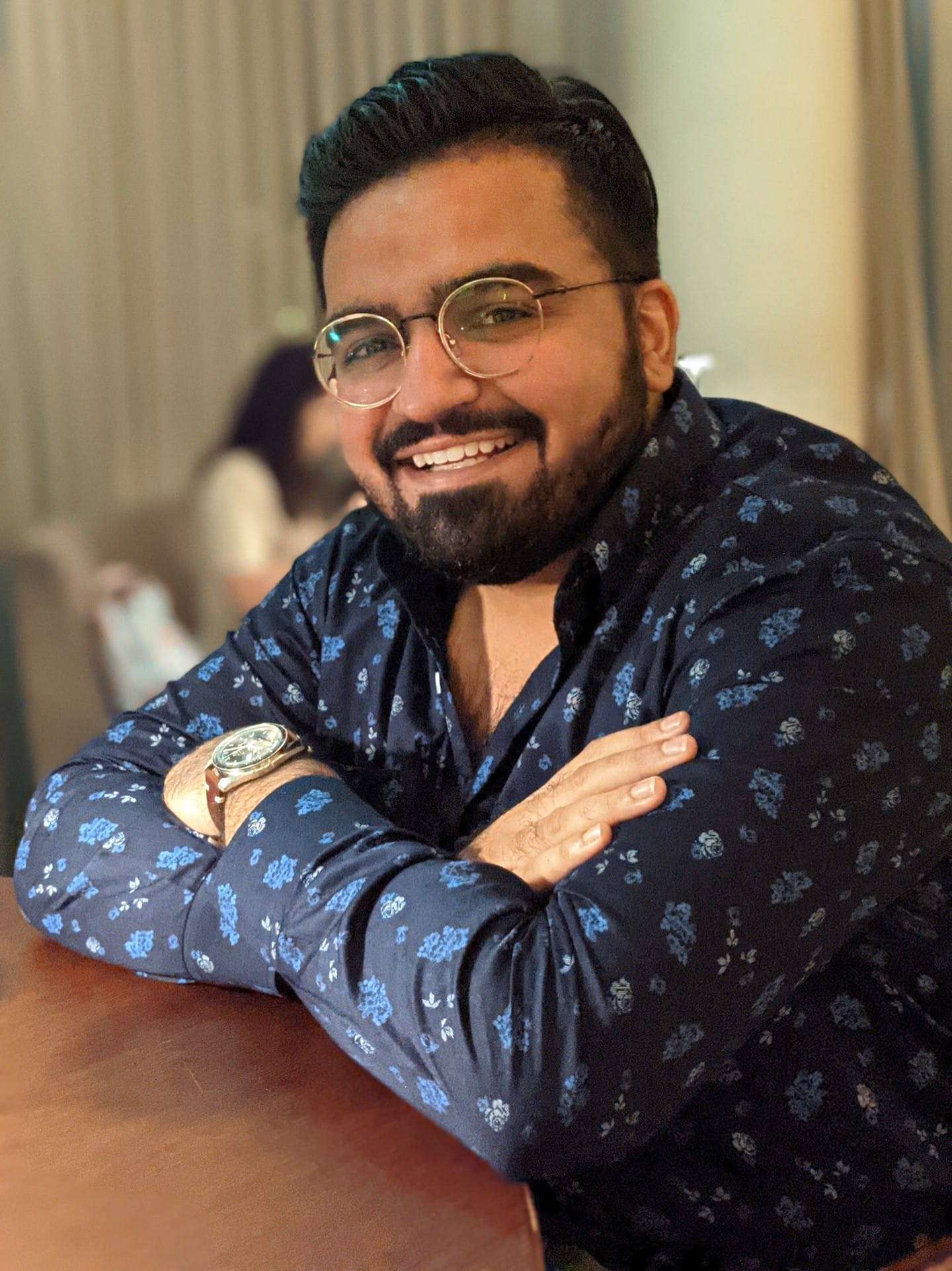
Year Awarded Scholarship: 2015
Undergraduate: Bachelor of Laws with Second Major in Public Policy & Public Management, Singapore Management University
Postgraduate:
Submitted in December 2021
I applied for the PSC Scholarship (Legal Service) as I wanted to pursue a legal career within the Public Service, a career which would allow me to serve the public interest in the course of my work and possibly contribute to advancing the rule of law in Singapore.— Dhiraj G Chainani
Why did you apply for the PSC’s scholarship and ultimately choose to accept it?
At the age of 18, I was clear about two things. First, I wanted to read Law at university, having seen how law has a very real impact on individuals in their daily lives, and fundamentally shapes the functioning of every society. Second, having been blessed with many opportunities to serve as a student leader and engage in community service, I wanted to pursue a career path where I could serve a larger purpose. With this in mind, I applied for the PSC Scholarship (Legal Service) as I wanted to pursue a legal career within the Public Service, a career which would allow me to serve the public interest in the course of my work and possibly contribute to advancing the rule of law in Singapore.
How has being a PSC scholarship holder impacted your academic journey and/or professional experiences?
The PSC Scholarship (Legal Service) provided me with the opportunity to explore different sectors of the Legal Service in the middle of my university journey. I had the chance to do internships at the Attorney-General’s Chambers, the Supreme Court of Singapore, as well as pursue a short stint as a pro bono volunteer at the Legal Aid Bureau. These were valuable opportunities to understand the varied work that a Legal Service Officer in the Public Service can possibly do, and gave me a better perspective about the postings I wanted to pursue upon graduation.
Share with us some stories of your student life and/or your experiences as a public officer
In university, I had the opportunity to do a 6-month overseas exchange at Tel Aviv University, Israel. Many thought I was crazy for wanting to go to such a “dangerous” place without any other friends from law school joining me. My exchange programme even almost got called off after then-US President Donald J Trump announced the moving of the US embassy to Jerusalem which sparked some protests. However, the PSC and my parents allowed me to go forward with my plans, with appropriate safety measures in place.
Doing an exchange programme at Tel Aviv University was an exhilarating experience. I had a chance to be in some very interesting classes: learning about “secularism” and the state’s use of law to regulate religion around the world; issues surrounding transitional justice; how politics greatly influences constitutional law in US and other parts of the world. I also had the opportunity to write an 8000-word research paper on the topic of how Singapore has dealt with the issue of secularism and religion in its society through various methods.
Outside the classroom, I had a chance to do even more. Learning about Jewish culture and its beautiful traditions; diving deep into debates about the Israeli-Palestinian conflict with both Israeli and Palestinian friends; forging new friendships with amazing people from all over the world; travelling all around Israel and parts of Europe — covering 51 cities in 178 days.
My main takeaway from my exchange programme was that it is so crucial not to rely solely on the media, but to actually experience things for ourselves, talk to people, and spend time to understand different perspectives. The Israeli-Palestinian conflict, in particular, is a difficult issue to grapple with, but it is one we should all be aware of and interested in. Having had the opportunity to travel into the West Bank and speak to Palestinians, as well as the discussions which took place while in Tel Aviv, I grew to appreciate the complexity of the conflict as well as better understand the competing considerations of stakeholders on both sides.
In my 11 months at the Attorney-General’s Chambers thus far, I have had the opportunity to handle many different criminal prosecutions, as well as assist seniors in more complex criminal prosecutions. The mentorship and training that has been provided to me while at the AGC has been extremely helpful in setting the right tone as I begin my career. My seniors and bosses at the office are extremely kind, patient and nurturing – they are always there to guide and offer their perspectives. More importantly, I appreciate the open environment at the workplace, where differing perspectives are accepted and there are clear channels to voice these differing perspectives on the course of action that should be taken on any particular matter.
Are there any misconceptions about working in the Public Service and/or being a PSC scholarship holder that you have come to realise are not true?
Some had suggested to me before I formally began my career at the Public Service that I would have to deal with a lot of red tape and bureaucracy while in service. In my experience thus far, I have found the experience to be far from the truth. As alluded to above, the open and frank environment in the AGC has been a very positive experience for me thus far, and I have enjoyed the work that I have done in my first year.
If there is one word you could use to describe the Public Service, what would it be and why?
Challenging. Having served just eleven months as a Deputy Public Prosecutor in the Attorney-General’s Chambers’ Crime Division, I have already learnt first-hand that the public’s expectations of the Prosecution as well as the Judiciary are extremely high, and rightly so. Every individual in the system plays an important role as a custodian of the public interest, and I constantly remind myself of this when I make decisions in the course of my work.
If you could give one piece of advice to prospective PSC scholarship applicants and/or recipients, what would it be?
Unlike some of my peers, I did not apply for other public or private sector scholarships at the time I decided to apply for the PSC scholarship. To me, scholarship applications constitute a serious and lifelong commitment to an industry or career path, and it is one that every individual should carefully consider before taking the important step of submitting an application. It is not just a commitment to working in a sector for the period of the 4 or 6-year bond that is tied to the scholarship, but a path that will undeniably shape the rest of your career, even if you choose to leave the sector after the bond duration. Carefully consider whether a career in the Public Service is one you are serious about, and apply for the PSC scholarship only after having made a decision on this.