
Milestones
Learn more about the PSC's milestones over the decades.
Last updated on 7 August 2026
Over The Decades
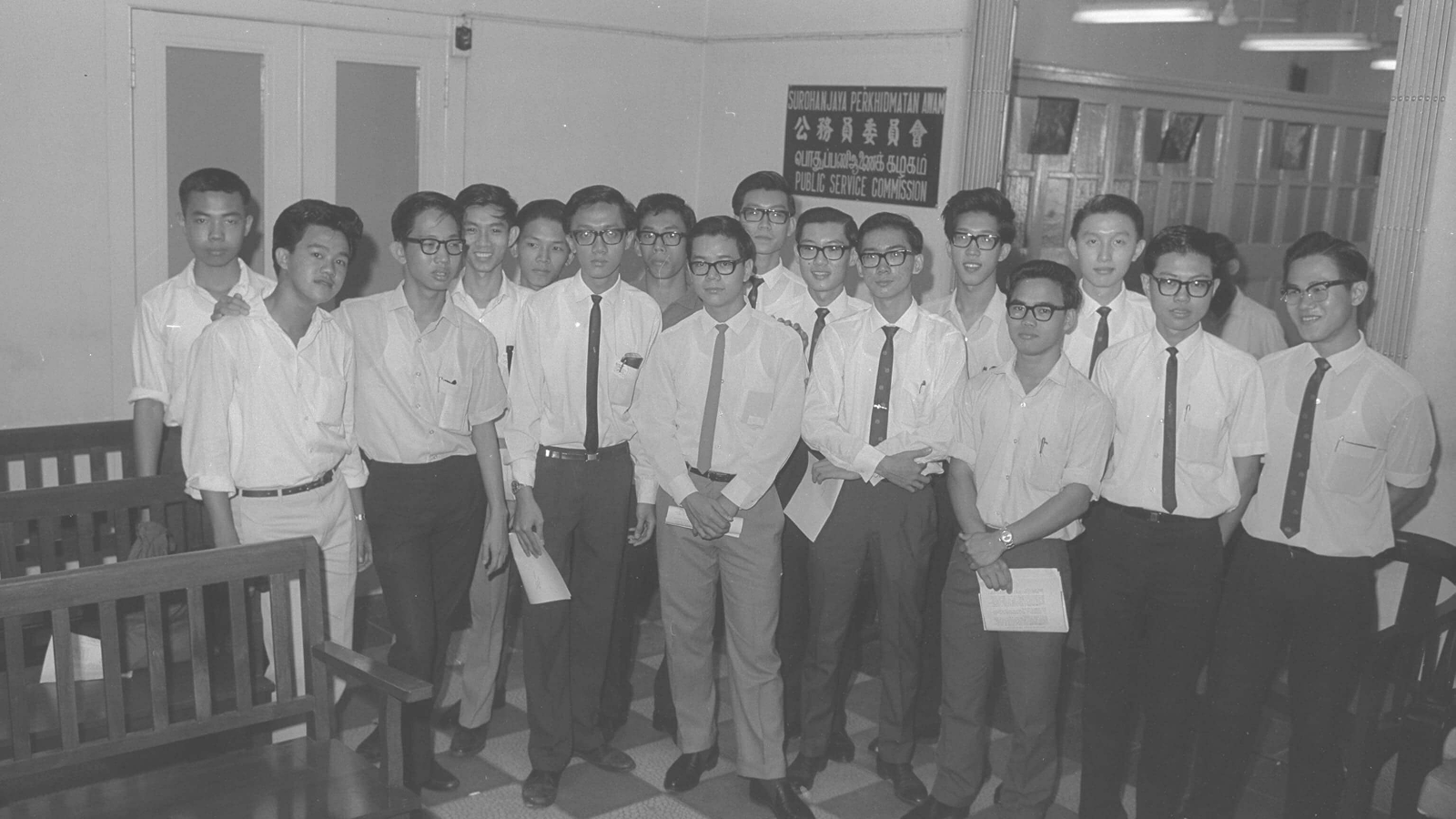
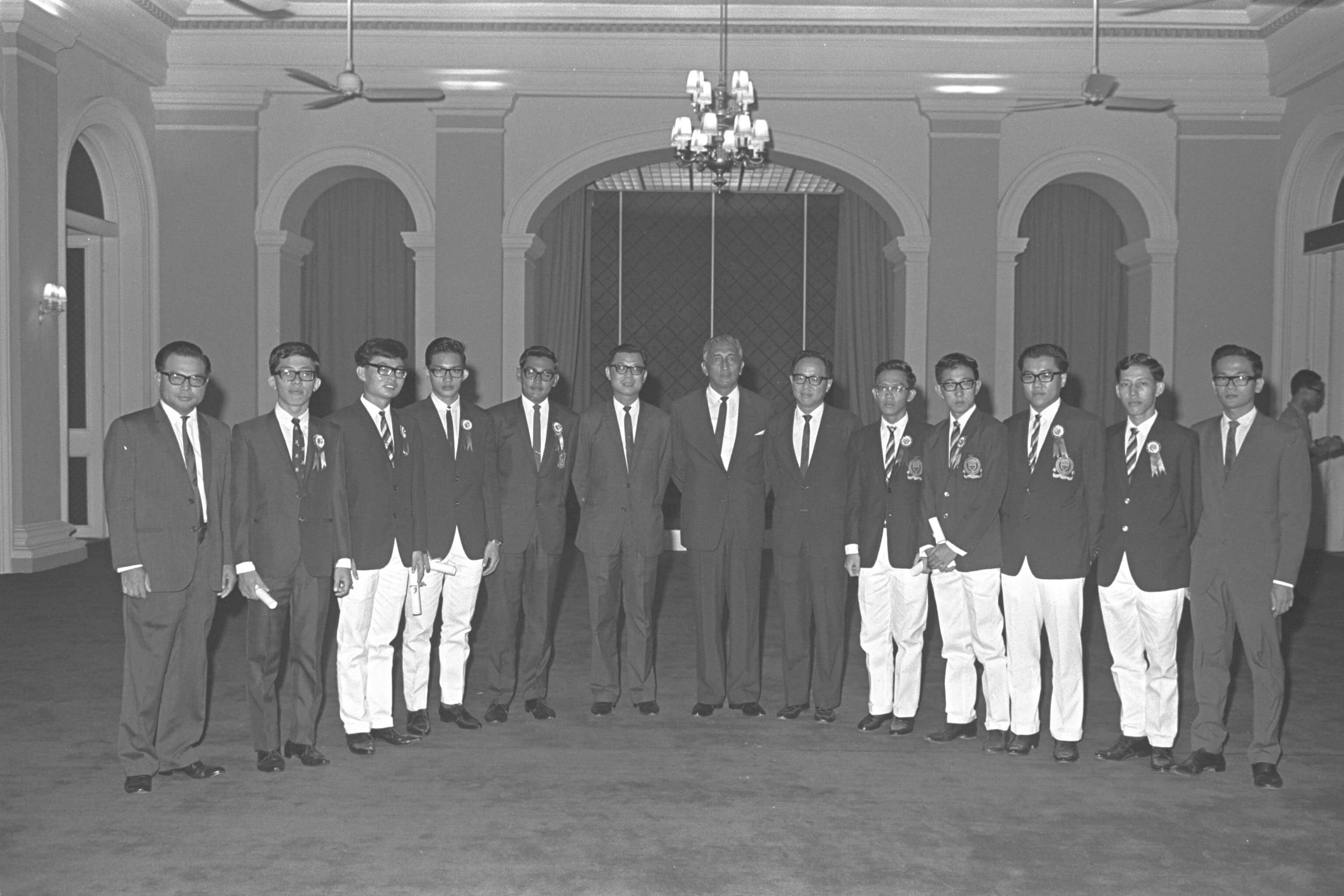
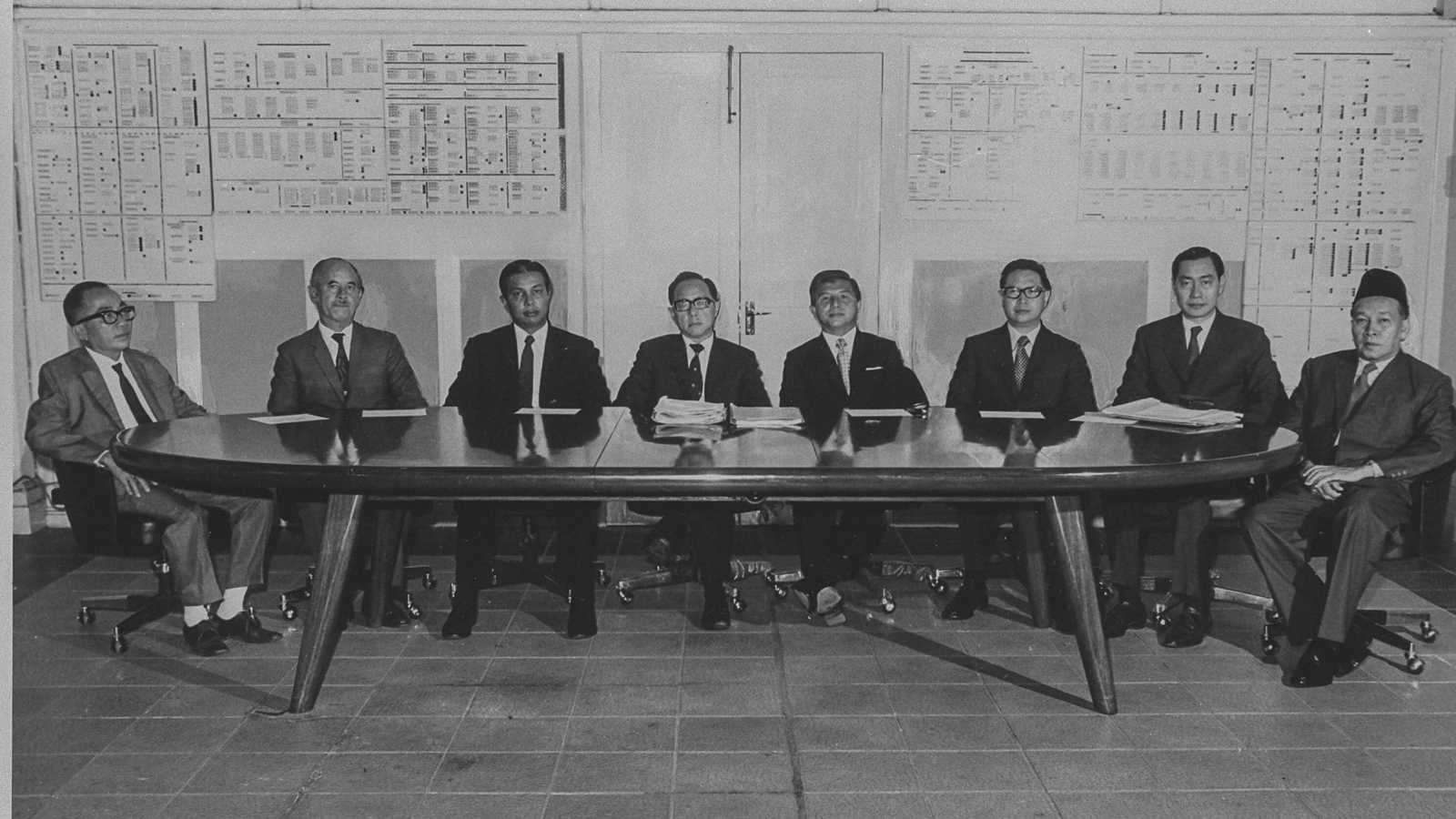

The PSC has a long history spanning the colonial era through independence to the development of modern Singapore. While its Members have changed and its role has evolved, the PSC’s commitment to upholding the integrity and reputation of the Singapore Public Service remains unwavering. It continues to select the best person for scholarships or public service leadership positions, and to maintain the discipline of public officers, without fear or favour.
Our History
1855 - The Beginning
The British set up the Civil Service Commission, on which Colonial Commissions would later be based. The Public Services Salaries Commission of Malaya, under the chairmanship of Sir Harry Trusted, recommended the setting up of a Public Service Commission (PSC) in 1947. In 1949, the PSC was constituted by the Public Services Commission Ordinance to advise the British governor on matters of recruitment, appointment and promotion of civil servants.
1950s - Establishment of the PSC
The PSC was established on 1 January 1951 as an independent body to advise the British Governor on matters related to Civil Service recruitment, appointment and promotion. In 1957, the PSC’s role evolved to include dismissal and disciplinary control. In line with the constitutional reforms when Singapore attained self-governance in 1959, the PSC was reconstituted more as an executive body advising the Yang di-Pertuan Negara on the appointment, dismissal and discipline of public officers. The Queen’s Scholarship was abolished and replaced with the Singapore State Scholarship, awarded by the PSC.
1960s - Evolving Roles of the PSC
In 1961, to build up the pool of local talent for the Civil Service, the PSC took over the selection for all scholarships, fellowships and training sponsored by the Singapore Government. In 1963, Singapore merged with the Federation of Malaya, Sarawak and North Borneo to form Malaysia. From its earlier advisory role, the PSC was transformed into a fully executive body with powers to “appoint, confirm, emplace on the permanent or pensionable establishment, promote, transfer and exercise disciplinary control over public officers”. As Singapore’s political status changed, the Singapore State Scholarship was transformed first into the Yang di-Pertuan Negara Scholarship in 1964, and subsequently renamed the President’s Scholarship after 1965.
1970s - Increase in Size of the Commission and Growing the Public Service Talent Pool
A Constitutional amendment in 1970 expanded the membership of the PSC to provide for a minimum of four and a maximum of seven members, excluding the Chairman. Due to a labour shortage in the Civil Service, more females were employed for various technical and other jobs traditionally confined to male candidates. The PSC decided to select, promote and appoint officers based on merit and beyond the vacancies available where there were deserving candidates. The PSC also recruited foreign talent for areas with a shortage of qualified local candidates. It also began to administer the Singapore Armed Forces Overseas Scholarship, as well as the ASEAN and Hong Kong Scholarships.
1980s - Delegation of Duties
In 1983, the PSC handed over personnel management of the Civil Service to the newly-formed Public Service Division, and delegated to the Permanent Secretaries its authority to appoint officers to junior grades. It then focused on its core Constitutional role: ensuring impartiality of appointments, promotions and disciplinary action.
1990s - Devolution of the PSC, ESC and PCDSC Personnel Functions to Personnel Boards and Amalgamation into a Single Commission - the PSC
On 1 July 1990, two sub-commissions of the PSC, the Education Service Commission (ESC) and the Police and Civil Defence Services Commission (PCDSC), were established to further improve the responsiveness and effectiveness of the Civil Service personnel management. A further Constitutional amendment in 1994 devolved functions from the PSC to personnel boards in the Ministries. From 1 January 1995, the PSC served as an appellate board to consider appeals against personnel board decisions other than those under the Education and Police and Civil Defence Services. The PSC retained the power to consider appeals from these personnel boards. On 1 April 1998, the ESC and PCDSC were amalgamated with the PSC into a single Commission. Dr Andrew Chew was appointed Chairman – the first ex-civil servant to hold the position.
2000s - Introduction of New Scholarship Schemes and Delegation of Discipline Authority
The PSC sharpened its focus on top-tier scholarships. It delegated administration of other tied scholarships to Ministries, while retaining overall authority to uphold standards. In 2002, the Management Associates Programme (MAP) was established to groom outstanding young officers for leadership positions. The PSC delegated to the Permanent Secretaries and Commissioner of Prisons authority to discipline certain populations of civil servants for minor misconduct. To meet the diverse needs of the Civil Service, the PSC Mid-Term Scholarship, PSC Master’s Scholarship and PSC China Scholarship were introduced between 2005 and 2009.
Present Day - Public Service Leadership Programme & Career Pathways
The PSC celebrated its 60th anniversary in 2011. Scholarships have continued to evolve alongside the Civil Service. In 2013, the MAP was superseded by the Public Service Leadership Programme (PSLP), which aims to widen and deepen the leadership corps. From 2015, the various PSC scholarships, with the exception of the President's Scholarship, were combined into a single PSC Scholarship. The PSC Scholarship has three career pathways: Public Administration, Professional Service and Uniformed Service. The PSC Scholarship (Engineering) and the PSC Scholarship (Public Finance) were inaugurated under the Professional Service pathway in 2017 and 2018 respectively. The PSC Scholarship (Sustainability) and PSC Master's Scholarship (Sustainability) were introduced in 2023 to strengthen sustainability and circularity capabilities across the Public Service.